Traditional Dress in the United Arab Emirates
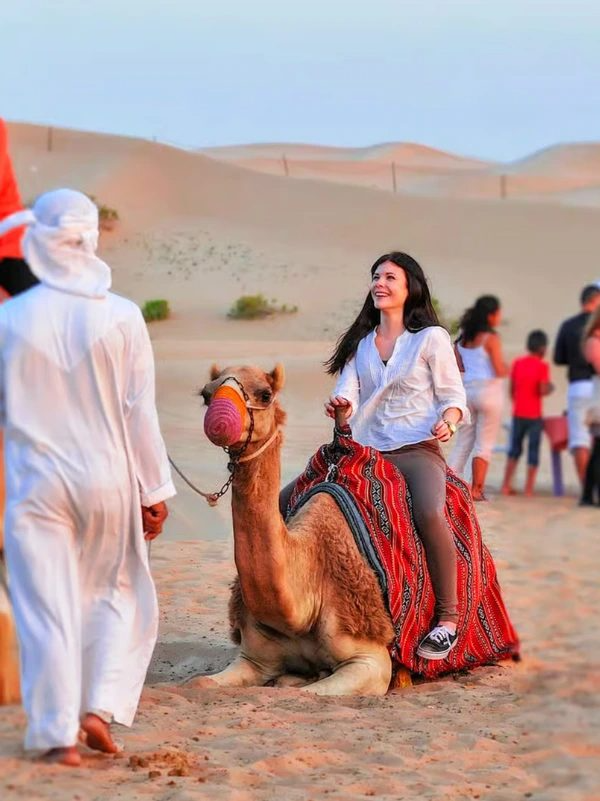
Key Takeaways
- Men traditionally wear the white kandura; women the black abaya.
- Dress is rooted in climate, modesty and heritage.
- Visitors should dress modestly at cultural and religious sites.
- You can try traditional dress for photos at many desert camps.
The Kandura and Abaya
Short answer: Emirati men traditionally wear the white kandura and ghutra headscarf; women wear the black abaya, often paired with a shayla headscarf — both are practical, climate-suited garments as much as cultural markers.
Emirati men wear the kandura, a long white robe suited to the desert climate, often with a ghutra headscarf. Women wear the abaya, a flowing black robe, frequently with a shayla headscarf. Both balance elegance, modesty and practicality. The kandura's white cloth reflects heat rather than absorbing it, while its loose, ankle-length cut allows airflow in a way that would be impossible in fitted Western clothing — a genuinely functional response to the climate, not simply a style choice.
Regional and Occasion Variations
Short answer: everyday dress leans plain and practical, while formal occasions bring embroidered trims, the bisht cloak for men, and more elaborate fabric choices for women — dress varies by context, not just by gender.
Daily-wear kanduras are simple and unadorned, but formal versions worn to weddings or National Day celebrations often feature a fine gold or silver trim along the collar and cuffs. On especially formal occasions, men may add a bisht — a lightweight, often gold-trimmed cloak worn open over the kandura, traditionally reserved for rulers, grooms and dignitaries. Women's abayas range from plain black cotton for daily wear to richly embroidered or crystal-embellished versions for weddings and celebrations, reflecting the same everyday-versus-formal distinction as men's dress.
Why It Matters
Short answer: understanding the reasoning behind Emirati dress — climate, modesty and heritage rather than restriction — makes cultural sites and interactions with local hosts noticeably more meaningful for visitors.
Traditional dress reflects the UAE's heritage and values. Understanding it enriches your visit and helps you show respect — particularly on tours like the Abu Dhabi city tour, which includes the Sheikh Zayed Grand Mosque. Knowing why a garment looks the way it does tends to shift a visitor's perspective from viewing it as simply different, to understanding it as a considered, climate- and culture-specific choice.
What Visitors Should Wear
Short answer: everyday clothing is fine across most of Dubai, but shoulders and knees should be covered at mosques, government buildings and other cultural or religious sites.
Everyday dress in Dubai is relaxed, but modest clothing covering shoulders and knees is expected at mosques and cultural sites. Our what to wear guide covers safari-specific advice. Loose, lightweight fabrics work well for both comfort and modesty in Dubai's climate — a practical overlap between respecting local norms and simply dressing sensibly for the heat.
Try It Yourself, Respectfully
Short answer: many desert camps offer traditional dress for guest photos as part of the evening experience — a welcomed, respectful way to engage with local culture when offered in that setting.
Many desert camps let you try on traditional dress for photos — a fun and respectful way to connect with local culture. Because it's offered by the camp as part of the cultural experience, rather than borrowed or purchased casually elsewhere, it's generally seen as an appreciative gesture rather than anything disrespectful — a distinction worth keeping in mind if you're ever unsure about wearing cultural dress as a visitor.
Frequently Asked Questions
What do Emiratis wear?
What should tourists wear in Dubai?
Why do Emirati men wear white and women wear black?
Is it respectful for tourists to wear traditional dress for photos?
Ready to Book Your Desert Safari?
Instant confirmation, free hotel pickup and free cancellation up to 24 hours before.